Board Feet ↔ Square Feet Calculator
A square foot is area; a board foot is volume — a square foot of wood exactly 1″ thick. Set the thickness and convert both directions; this is also the math behind "how much will my lumber cover?"
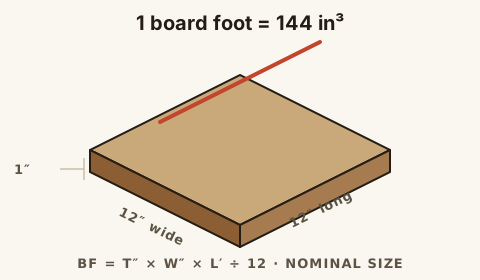
Board foot vs square foot — the one-inch pivot
At exactly one inch of thickness the two units shake hands: 1 board foot = 1 square foot. Everything else is proportion. Divide board feet by thickness in inches to get coverage; multiply area by thickness to get board feet: ft² = BF ÷ T″ and BF = ft² × T″. So 100 bf of 4/4 stock skins 100 square feet of surface, while the same 100 bf milled from 8/4 covers only 50 — the wood went into depth instead of spread.
This is estimating math, not a cut plan: real boards lose width to jointing, edging and tongue-and-groove overlap. Flooring and paneling estimators usually add 10–15% on top of raw coverage. And remember plywood and other sheet goods aren't sold in board feet at all — they're priced per sheet, so this page only applies to solid stock (background in what is a board foot).
Working the other direction — "I have a wall of X square feet, how much rough lumber do I buy?" — multiply area by finished thickness, add your waste factor, and take the answer to the board foot calculator to price it by species. Spraying foam instead of hanging boards? The insulation trade runs the exact same area × thickness math under the same name: spray foam board feet.
FAQ
Is a board foot the same as a square foot?
Only at 1″ thick. Thicker stock covers less area per board foot, thinner covers more.
How many board feet do I need for 200 ft² of ¾″ paneling?
200 × 0.75 = 150 bf of finished wood — call it 170–175 bf of rough 4/4 after surfacing and waste.
Real-world coverage: flooring, paneling, ceilings
Raw conversion is the starting line, not the order. Tongue-and-groove loses face width to the tongue (a "1×6" T&G shows ~5⅛″), shiplap loses to the rabbet, and every room eats cuts at the walls — which is why flooring suppliers quote a coverage factor and estimators add 10–15% on top of the math above. A practical sequence: measure the area, multiply by finished thickness for net board feet (per nominal convention), add milling loss if you're starting from rough stock (4/4 planes to ~13/16″), then add waste. For a 200 ft² wall in ¾″ paneling that's 150 bf net → ~185 bf ordered — and now the price table can tell you what the wall costs in pine versus walnut before you commit.